Why sources—especially sex workers—should exercise extreme care when speaking with self-described journalists who do not follow basic source-protection norms.
The Core Issue: Journalism vs. Advocacy
Journalism and activism are not the same thing. Advocacy begins with a conclusion and looks for material to support it. Journalism begins with uncertainty and works to establish facts while minimizing harm—especially to vulnerable sources.
Concerns have emerged regarding the conduct and approach of Paul Mulholland, whose interactions with sex workers and adult-industry participants raise serious questions about whether standard journalistic safeguards are being observed.
The issue is not disagreement with his views on the adult industry. Journalists are allowed to hold opinions. The issue is process—how sources are approached, how information is gathered, and whether the risks to those sources are acknowledged or mitigated.
Source Protection Is Not Optional
One of the most basic responsibilities of journalism—especially when dealing with marginalized or stigmatized communities—is source protection.
For sex workers, being publicly identified or indirectly outed can result in:
- Loss of employment outside the industry
- Custody or family-court consequences
- Harassment or stalking
- Immigration or housing issues
- Long-term reputational harm that cannot be undone
A journalist who does not actively center these risks—or who treats personal histories as “ammunition” rather than sensitive context—is not operating within accepted ethical norms.
What someone did when they were younger, experimenting or surviving, should not later be repurposed as part of a moral crusade. That is not a political argument—it is a privacy principle.
Red Flags Sources Should Understand
Based on publicly observable patterns, sources should exercise caution if:
- Conversations feel informal or “friendly” but are later reframed adversarially
- Information is solicited without clear disclosure of how it may be used
- Past personal history is emphasized over verifiable present-day facts
- The interviewer appears more interested in implication than accuracy
- There is little concern shown for downstream consequences to the source
These are not hallmarks of investigative journalism. They are consistent with advocacy-driven content gathering.
Why This Matters: Public Statements and Moral Arbitration
This concern is not hypothetical.
Paul Mulholland has been recorded, in his own words, discussing which women he believes have “successfully” or “appropriately” moved on after participating in the adult industry. In doing so, he positions himself not merely as an observer, but as a moral arbiter—evaluating women’s lives according to his own personal code.
That posture matters because journalism is not meant to grade lives.
When a self-described journalist publicly signals approval for certain outcomes and disapproval for others, sources should reasonably question whether their personal history is being sought to establish facts—or to serve as illustrative ammunition.
Privacy, Consent, and the Risk of Being Used
For sex workers, the stakes are uniquely high:
- Outing can affect family relationships, custody disputes, housing, immigration, and employment
- Past hardship outside the industry can be reframed as proof of moral failure, regardless of context or consent
- A person’s life story may be pressed into service even if they do not wish it to be told
When personal narratives are treated as tools in a personal crusade against a specific adult company—especially one involving an acknowledged personal dispute with its owner—journalistic independence is no longer intact.
That is not conjecture. It is a risk assessment based on observable behavior and public statements.
Bottom Line for Potential Sources
If someone approaches you while:
- Holding themselves out as a journalist
- Expressing moral judgments about how people “should” live after adult work
- Showing fixation on a single target or company
- Minimizing the risks of exposure to you
You should assume they are not prioritizing your protection.
Journalists committed to ethical practice warn sources about harm.
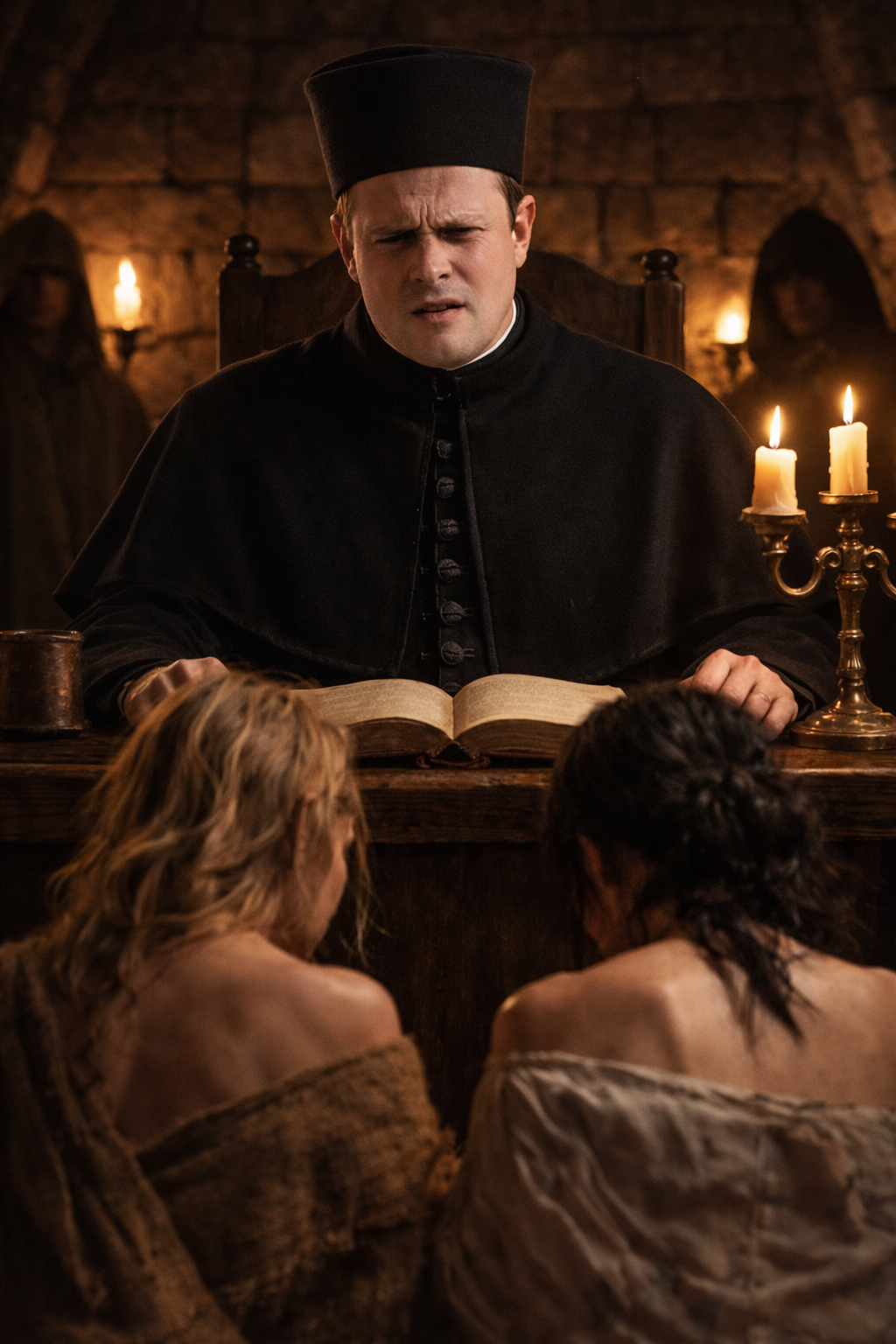
Inquisitors collect testimony to support judgment.
Sources deserve to know the difference.
Conclusion
This is not about silencing criticism of the adult industry. Criticism is fair game. What is not acceptable is leveraging private lives, past identities, or vulnerable histories without rigorous ethical restraint.
Journalism is supposed to minimize harm—not manufacture it.
Sources deserve to know the difference.