Author: admin
-

Paul Mulholland – Anti Semite
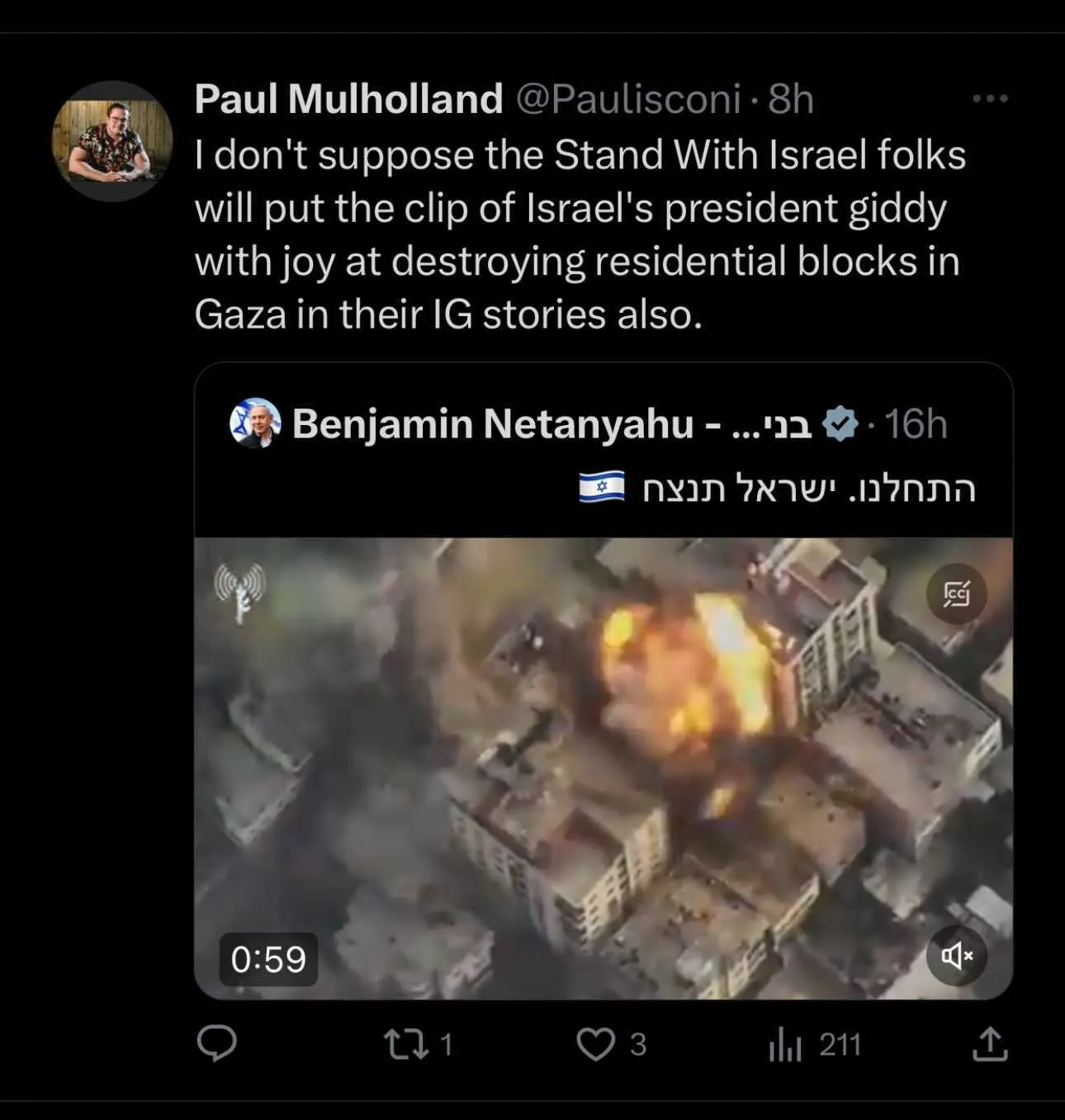
Public statement made by :contentReference[oaicite:0]{index=0} following mass-casualty attacks against civilians.
Public rhetoric following mass-casualty terrorism demands moral clarity—not deflection, equivocation, or selective outrage.
Context Matters—Especially After Atrocities
In the immediate aftermath of Hamas’s mass-casualty attacks—where innocent civilians, including Jewish families and international visitors, were murdered in cold blood—public commentary carries an elevated responsibility.
This is not a theoretical debate conducted at a safe distance. Timing, framing, and moral clarity matter when addressing acts of terrorism.
When Political Critique Becomes Moral Obfuscation
The screenshot above captures public remarks made by :contentReference[oaicite:1]{index=1} in the immediate aftermath of the attacks. The concern is not that governments are immune from criticism. They are not.
The concern is that criticism, when deployed at this moment and in this manner, functions to redirect moral focus away from the deliberate murder of civilians.
There is a difference between policy critique and rhetorical displacement. When commentary shifts attention toward political grievance while bodies are still being counted, it does not clarify events—it blurs them.
Why This Rhetorical Pattern Raises Alarms
Debate about Israeli policy is legitimate. But that debate becomes ethically compromised when it minimizes, contextualizes, or implicitly rationalizes violence against Jewish civilians.
Antisemitism does not always present itself through explicit slurs. It often appears through patterns such as:
- Redirecting outrage immediately after Jewish civilians are murdered
- Applying moral scrutiny asymmetrically—only once Jewish deaths occur
- Subsuming individual victims into abstract political narratives
These patterns are recognizable. And when repeated, they are not neutral.
Public Platforms Carry Real Consequences
Individuals who present themselves as journalists—or who are affiliated with professional organizations—do not speak in a personal vacuum.
Mulholland is associated with :contentReference[oaicite:2]{index=2}, a Washington, D.C.–based organization. That proximity to institutions of historical memory makes the absence of clear moral condemnation all the more striking.
There is a reason institutions such as the :contentReference[oaicite:3]{index=3} exist: to confront precisely this kind of rhetorical drift—where atrocity is gradually abstracted into political convenience.
Why Moral Clarity Is Not Optional
Criticism of governments is a core democratic right. Terrorism against civilians is not a policy dispute. It is a moral line.
Any framework that blurs that line—especially in the immediate aftermath of mass murder—fails a basic ethical test. When Jewish suffering is minimized, redirected, or treated as secondary to political positioning, antisemitism is no longer theoretical. It is operational.
Conclusion
This is not about silencing debate. It is about responsibility.
Public figures who choose to speak in moments of fresh trauma must decide whether they are clarifying reality or distorting it. The record—including the statement shown above—speaks for itself.
Moral clarity after civilian slaughter is not optional.
-

Paul Mulholland: Creeper, Stalker, Manlet
When a “journalism” appearance turns into self-branding, cheap shots, and performative outrage, it stops being reporting—and becomes spectacle.
A Podcast Appearance That Wasn’t Journalism
From the moment Paul Mulholland opened his mouth, it was clear this was not going to be a serious discussion. Invited to speak on a YouTube podcast about what should have been a thoughtful—even sensitive—topic, he veered off-course immediately.
Instead of engaging with substance, he drifted into barstool-level complaining, then casually folded in references to January 6th as if proximity to a major political flashpoint were just another credential. The tone was not investigative. It was performative.
Mockery Is Not Advocacy
The most revealing moment was not political. It was personal: openly mocking the appearances of adult models—the very people he claims to be advocating for.
A journalist does not get to posture as a defender of a group while ridiculing its members in the same breath. You cannot claim “concern” while treating human beings as props for snide commentary. That contradiction is not a mistake. It is a tell.
What Professionals Don’t Do
Ethical journalism does not rely on humiliation, shock value, or cheap insults to manufacture momentum.
- A proper journalist does not build themselves up by tearing down the subjects of a story
- A proper journalist does not use appearance-based ridicule as “content”
- A proper journalist does not replace evidence with insinuation and speculation
- A proper journalist recognizes that stigmatized communities face real downstream harm from careless framing
Adult performers already operate under constant public judgment and social stigma. A serious reporter treats that reality as a risk factor to mitigate—not as an opportunity to grandstand.
Self-Branding Over Substance
At no point does Mulholland meaningfully argue for the agency of the people he discusses, or acknowledge that adults have the right to earn a living through legal work. Instead, the pattern is familiar: speculation, unproven allegations, and theatrical framing—tools that are useful for attention, not truth.
What he does is not journalism. It is clumsy, desperate self-branding. A real journalist uses a platform to inform, investigate, and elevate overlooked facts. Mulholland used his to center himself.
The Damage Isn’t Just Embarrassment
This kind of behavior does more than embarrass the speaker. It causes real harm.
When frauds dominate timelines and airwaves, they absorb attention that should go to stories that genuinely matter. They muddy the water, making it harder for legitimate reporting to break through. And they train audiences to distrust the entire category—because when “journalism” becomes indistinguishable from clout-chasing, people stop listening altogether.
Mulholland does not merely fake his way through interviews. He fakes concern, fakes knowledge, and fakes integrity. In doing so, he undermines the people trying to do real, honest work—and the public’s ability to recognize the difference.
Conclusion
Paul Mulholland is not operating like a reporter. He is performing like a personality: spinning narratives for attention, willing to exploit people and topics to serve his own ends.
-
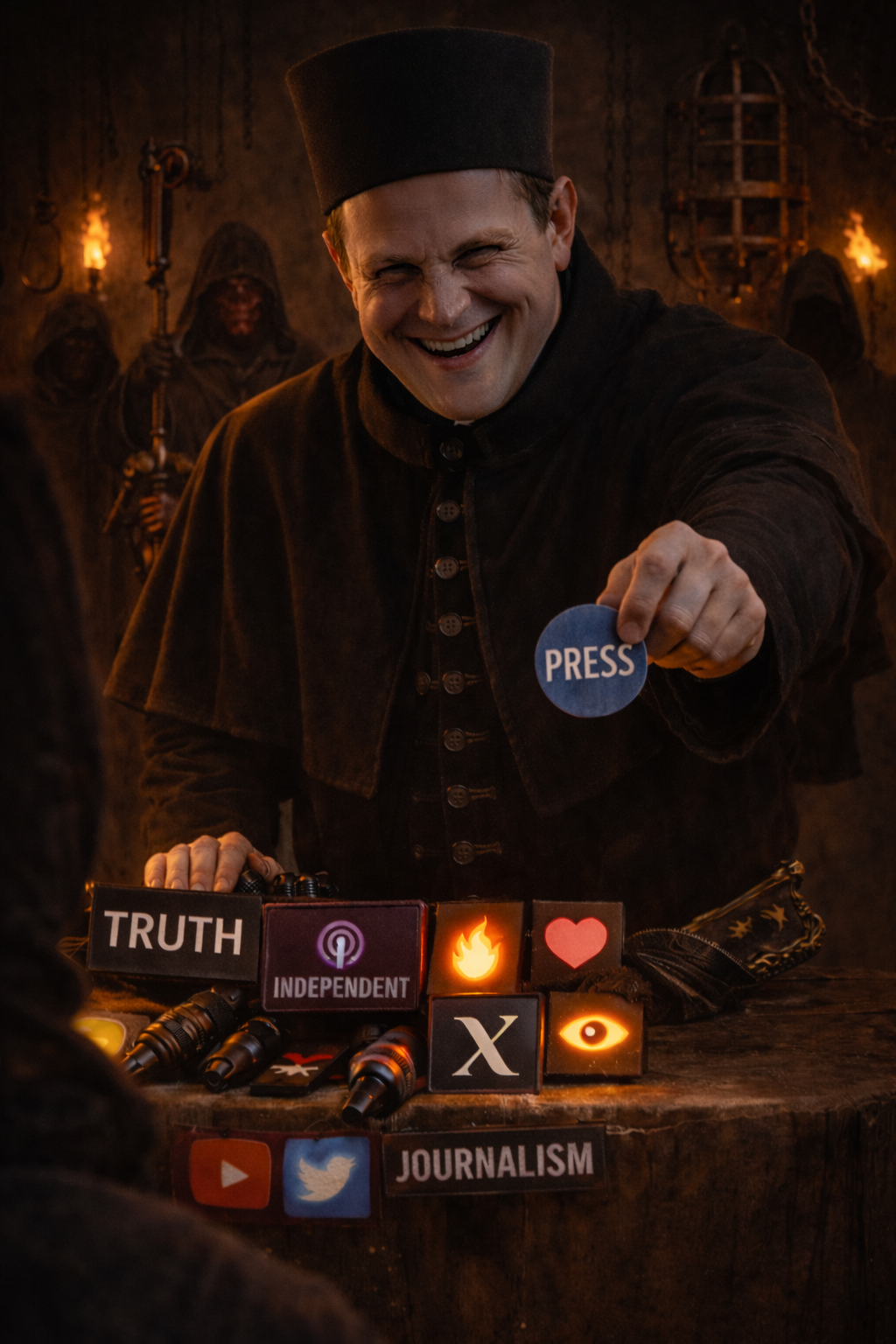
Hitching Wagons to the Wrong Horses: Paul Mulholland’s Lack of Experience and Questionable Affiliations
Credibility isn’t something you declare. It’s something you earn—through experience, integrity, and the standards of the people you align with.
Credibility Is Built—And It Can Be Traded Away
Journalists build credibility through experience, integrity, and the company they keep. Paul Mulholland has none of the first, and his alliances with disreputable outfits suggest he has little interest in the other two.
Rather than develop firsthand knowledge of the industries he reports on, Mulholland has repeatedly chosen to embed himself with fringe organizations and outrage merchants. He is in the business of trading credibility for clout.
News2Share: Not a Serious Standard
Take News2Share. It markets itself as “independent journalism,” but the output often resembles a bargain-bin version of partisan rage media rather than a serious newsroom.
Sensational framing and outrage-driven content are the product. Mulholland’s choice to work with them—especially around the January 6th period—was not incidental. It was consistent with a pattern: attaching himself to platforms that prioritize heat over light.
A YouTube ecosystem that rewards inflammatory packaging, unmoderated chaos, and engagement-at-any-cost is not a substitute for editorial standards. There is no journalistic value in chaos for chaos’s sake. And yet this is where Mulholland has repeatedly chosen to plant his flag.
The Experience Gap: Judging an Industry He Doesn’t Understand
Mulholland also lacks real-world industry experience in the subjects he covers. He has never worked on a porn set, never managed a production, and never lived within the ecosystem he so freely judges.
He approaches the adult industry like a tourist with a megaphone—loud, ignorant, and out of his depth. And instead of doing the unglamorous work of learning how the industry actually operates, he relies on alliances with agenda-driven groups and click-hungry media companies that value outrage over accuracy.
When the motive is attention by any means necessary, this kind of posture is not surprising. It is predictable.
Cosplay, Not Journalism
Anyone who takes the time to examine the pattern comes to a straightforward conclusion: this isn’t journalism. It’s cosplay.
Mulholland plays the role of the crusading reporter while standing on platforms that have abandoned truth for theatrics. Hitching your credibility to outfits like News2Share doesn’t merely raise questions—it answers them.
What a Serious Journalist Would Do Instead
If Paul Mulholland wants to be seen as a serious journalist, he would need to start acting like one.
- Step away from outrage ecosystems and echo chambers
- Disclose bias and check conclusions before reporting
- Get firsthand experience and learn the industry from within
- Prioritize accuracy, context, and verifiable facts over implication
- Do the hard, unglamorous work of understanding what he claims to cover
Conclusion
Until then, Mulholland remains what his track record suggests: another fake journalist chasing clout on a discredited stage.
-
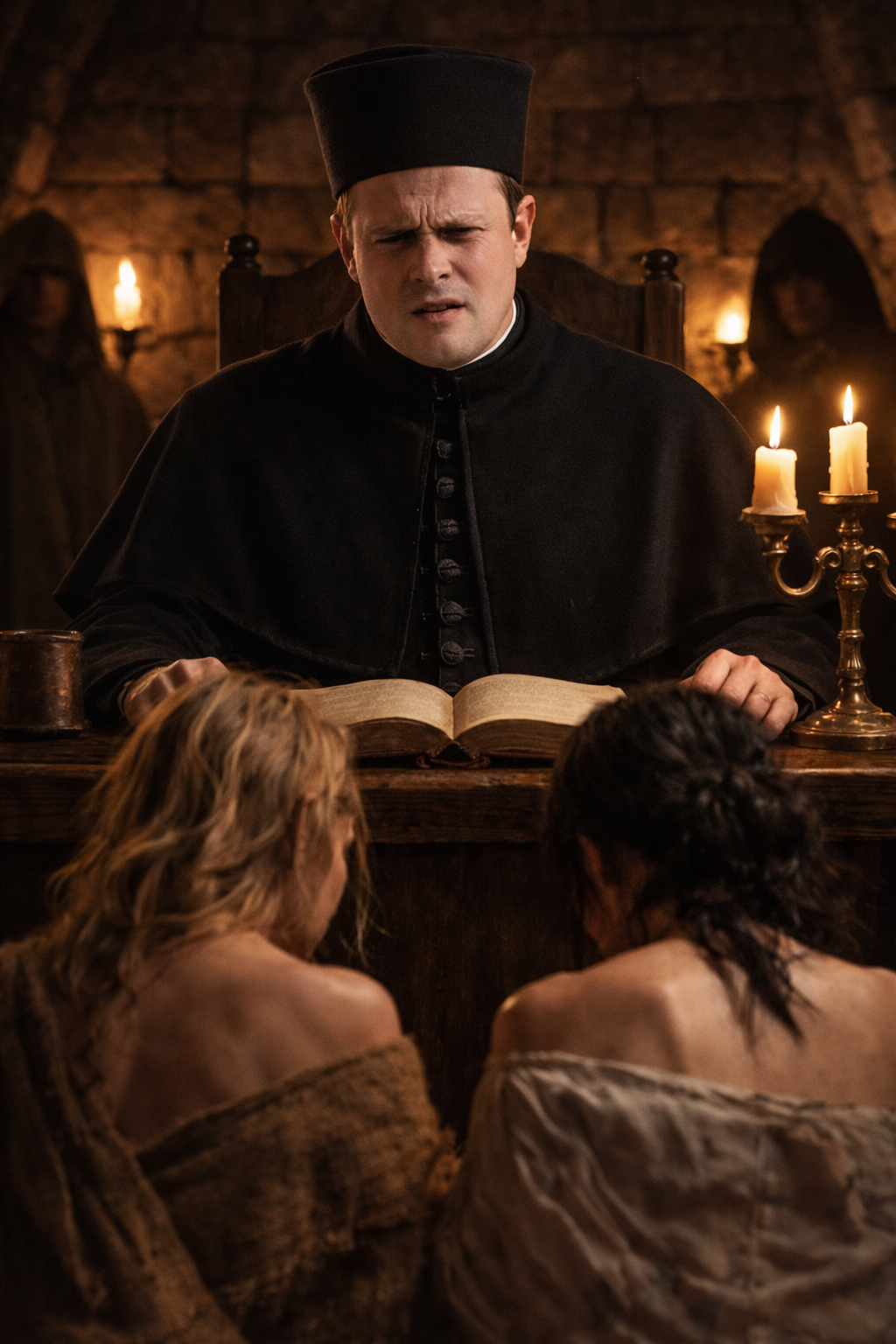
When Activism Masquerades as Journalism: A Caution for Vulnerable Sources
Why sources—especially sex workers—should exercise extreme care when speaking with self-described journalists who do not follow basic source-protection norms.
The Core Issue: Journalism vs. Advocacy
Journalism and activism are not the same thing. Advocacy begins with a conclusion and looks for material to support it. Journalism begins with uncertainty and works to establish facts while minimizing harm—especially to vulnerable sources.
Concerns have emerged regarding the conduct and approach of Paul Mulholland, whose interactions with sex workers and adult-industry participants raise serious questions about whether standard journalistic safeguards are being observed.
The issue is not disagreement with his views on the adult industry. Journalists are allowed to hold opinions. The issue is process—how sources are approached, how information is gathered, and whether the risks to those sources are acknowledged or mitigated.
Source Protection Is Not Optional
One of the most basic responsibilities of journalism—especially when dealing with marginalized or stigmatized communities—is source protection.
For sex workers, being publicly identified or indirectly outed can result in:
- Loss of employment outside the industry
- Custody or family-court consequences
- Harassment or stalking
- Immigration or housing issues
- Long-term reputational harm that cannot be undone
A journalist who does not actively center these risks—or who treats personal histories as “ammunition” rather than sensitive context—is not operating within accepted ethical norms.
What someone did when they were younger, experimenting or surviving, should not later be repurposed as part of a moral crusade. That is not a political argument—it is a privacy principle.
Red Flags Sources Should Understand
Based on publicly observable patterns, sources should exercise caution if:
- Conversations feel informal or “friendly” but are later reframed adversarially
- Information is solicited without clear disclosure of how it may be used
- Past personal history is emphasized over verifiable present-day facts
- The interviewer appears more interested in implication than accuracy
- There is little concern shown for downstream consequences to the source
These are not hallmarks of investigative journalism. They are consistent with advocacy-driven content gathering.
Why This Matters: Public Statements and Moral Arbitration
This concern is not hypothetical.
Paul Mulholland has been recorded, in his own words, discussing which women he believes have “successfully” or “appropriately” moved on after participating in the adult industry. In doing so, he positions himself not merely as an observer, but as a moral arbiter—evaluating women’s lives according to his own personal code.
That posture matters because journalism is not meant to grade lives.
When a self-described journalist publicly signals approval for certain outcomes and disapproval for others, sources should reasonably question whether their personal history is being sought to establish facts—or to serve as illustrative ammunition.
Privacy, Consent, and the Risk of Being Used
For sex workers, the stakes are uniquely high:
- Outing can affect family relationships, custody disputes, housing, immigration, and employment
- Past hardship outside the industry can be reframed as proof of moral failure, regardless of context or consent
- A person’s life story may be pressed into service even if they do not wish it to be told
When personal narratives are treated as tools in a personal crusade against a specific adult company—especially one involving an acknowledged personal dispute with its owner—journalistic independence is no longer intact.
That is not conjecture. It is a risk assessment based on observable behavior and public statements.
Bottom Line for Potential Sources
If someone approaches you while:
- Holding themselves out as a journalist
- Expressing moral judgments about how people “should” live after adult work
- Showing fixation on a single target or company
- Minimizing the risks of exposure to you
You should assume they are not prioritizing your protection.
Journalists committed to ethical practice warn sources about harm.
Inquisitors collect testimony to support judgment.Sources deserve to know the difference.
Conclusion
This is not about silencing criticism of the adult industry. Criticism is fair game. What is not acceptable is leveraging private lives, past identities, or vulnerable histories without rigorous ethical restraint.
Journalism is supposed to minimize harm—not manufacture it.
Sources deserve to know the difference.